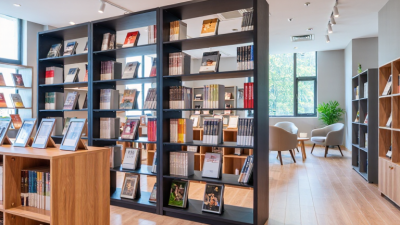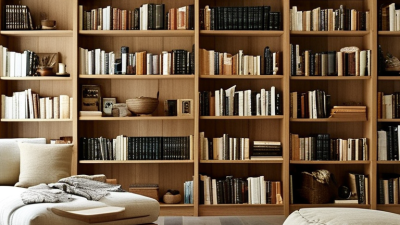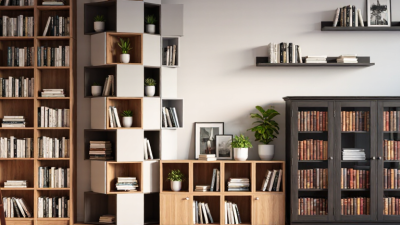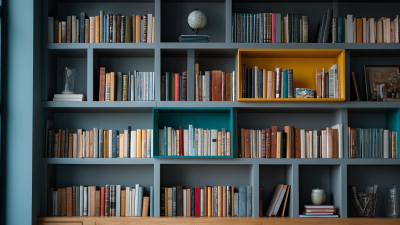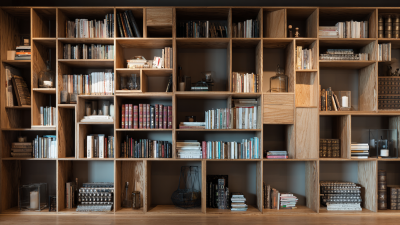
For global buyers, a Bookshelf is more than a place to store novels. It shapes room flow, visual balance, and everyday access. The right choice depends on climate, housing size, assembly skills, and local buying habits. A narrow ladder shelf may suit a compact Tokyo apartment. A solid modular unit may work better in a spacious family home. Small details matter, including wall clearance, shelf depth, edge safety, and moisture resistance.
Market evidence supports this wider view. Grand View Research estimates that the global home furniture market reached approximately USD 523.4 billion in 2023, with continued growth expected through 2030. Its findings reflect rising demand for functional, adaptable, and visually appealing furniture. Technavio’s furniture market analysis also identifies e-commerce, space-saving designs, and changing household lifestyles as important growth factors. These trends help explain why buyers increasingly compare floating, corner, modular, cube, industrial, and adjustable Bookshelf designs.
But no ranking fits every country or household. A trend report cannot replace practical testing. Flat-pack furniture may reduce shipping costs, yet assembly quality can vary. Glass shelves look light, but they demand careful handling. Tall units save floor space, although they may require secure wall anchoring. This guide examines ten Bookshelf types through usability, materials, stability, maintenance, and global purchasing considerations. The evaluation draws on market research, product experience, and common retail standards. Some conclusions remain debatable. That is useful. Buyers should question attractive photographs, measure twice, and check local safety expectations before ordering.
What Are the Top 10 Bookshelf Types for Global Buyers?
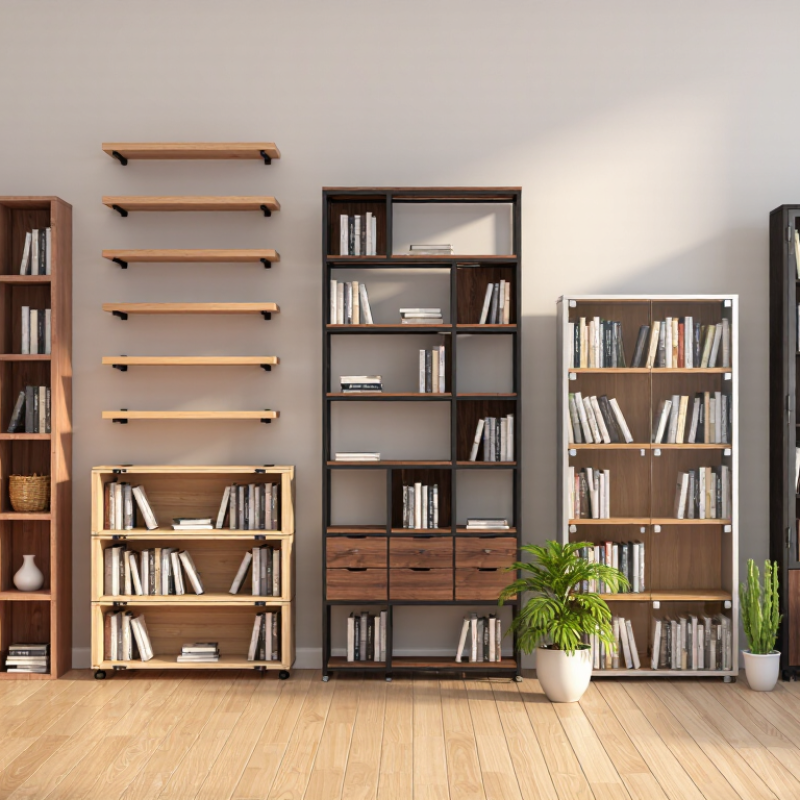
Defining bookshelf types helps buyers match storage with room size, materials, and shipping conditions. The ten main types are ladder, cube, modular, wall-mounted, corner, revolving, built-in, room-divider, floating, and standard freestanding bookshelves. Grand View Research valued the global furniture market at approximately USD 516.6 billion in 2022. This scale suggests strong demand, but product choice remains highly local. Urban buyers often prefer slim ladder or floating designs. Families may need wider cube or modular storage. Retailers should also consider flat-pack efficiency, assembly time, and packaging protection.
Material affects both perceived quality and transport risk. Solid wood offers warmth and repairability, while engineered wood can reduce cost and weight. Metal frames suit industrial interiors, but coating quality deserves inspection. The International Trade Centre reports that furniture trade remains a major global manufacturing category, with Asia supplying a substantial share of international demand. Still, one ranking cannot fit every market. Moisture, apartment layouts, and reading habits vary sharply. I would not treat “best” as universal.
Tips: Ask for tested load capacity, panel thickness, edge finishing, and carton dimensions. Compare usable shelf depth, not only external width. For small rooms, wall-mounted or corner units save floor space. For flexible retail programs, modular cubes are practical, though repeated assembly may weaken connections. A sample inspection is wiser than trusting photos alone.
| Rank | Bookshelf Type | Typical Structure | Common Materials | Typical Size Range | Typical Load Guidance | Best Use | Key Buying Considerations |
|---|---|---|---|---|---|---|---|
| 1 | Standard Freestanding Bookcase | Vertical frame with multiple fixed or adjustable shelves and a finished back panel. | Engineered wood, solid wood, metal, or a combination of these materials. | 60–100 cm wide 25–40 cm deep 120–220 cm high |
Approximately 10–30 kg per shelf, depending on construction and span. | Living rooms, bedrooms, home offices, libraries, and general storage. | Versatility Check anti-tip hardware, shelf adjustability, edge finishing, and assembly requirements. |
| 2 | Ladder Bookshelf | Open, leaning frame with shelves that usually become wider toward the bottom. | Solid wood, steel, bamboo, or engineered wood. | 45–80 cm wide 30–45 cm deep 140–190 cm high |
Approximately 5–15 kg per shelf; lower shelves generally support more weight. | Compact apartments, decorative displays, bathrooms, and home offices. | Space-saving Confirm wall anchoring, floor levelers, tilt angle, and the depth of upper shelves. |
| 3 | Modular or Cube Shelving | Individual square or rectangular compartments that can be used vertically or horizontally. | Engineered wood, laminated particleboard, plywood, or powder-coated metal. | 30–120 cm wide per unit 30–40 cm deep 30–200 cm high when stacked |
Approximately 8–20 kg per compartment, subject to panel thickness and configuration. | Books, baskets, records, toys, office supplies, and room dividers. | Flexible layout Review stacking limits, connector strength, wall fixing, and compatibility between modules. |
| 4 | Wall-Mounted Floating Shelves | Individual shelves attached directly to a wall with concealed or visible brackets. | Solid wood, plywood, tempered glass, metal, or engineered wood. | 40–120 cm wide 15–30 cm deep 2–8 cm thick |
Approximately 5–15 kg per shelf when correctly fixed to suitable wall structure. | Small rooms, display areas, kitchens, offices, and minimalist interiors. | Minimal footprint Wall type, bracket capacity, fixing method, shelf span, and installation accuracy are critical. |
| 5 | Corner Bookshelf | Triangular, angled, or curved shelving designed to fit into a room corner. | Engineered wood, solid wood, metal, or mixed materials. | 30–70 cm per side 25–40 cm deep 120–200 cm high |
Approximately 5–15 kg per shelf, depending on shelf geometry and support points. | Unused corners, small apartments, reading areas, and decorative storage. | Corner efficiency Measure both walls, check clearance from doors and windows, and verify stability at the top. |
| 6 | Built-In or Recessed Bookshelves | Fixed shelving integrated into a wall, alcove, cabinet system, or architectural opening. | Painted MDF, plywood, solid wood, metal, or plasterboard-based construction. | Custom width and height 20–40 cm typical depth |
Approximately 15–40 kg per shelf when properly supported and securely installed. | Libraries, living rooms, offices, media walls, and high-capacity storage. | Maximum integration Requires accurate site measurements, professional installation, ventilation planning, and possible building work. |
| 7 | Barrister-Style Bookcase | Stackable cabinet sections with framed glass or solid doors that protect books from dust. | Solid wood, engineered wood, glass, metal hardware, or wood veneer. | 60–100 cm wide per section 25–40 cm deep 35–45 cm high per section |
Approximately 15–25 kg per section, depending on hinges, door design, and shelf support. | Collections, offices, formal interiors, and dust-sensitive storage. | Protective storage Check door clearance, glass safety, stacking stability, ventilation, and weight distribution. |
| 8 | Industrial-Style Open Shelving | Open shelving system using visible metal frames, braces, and broad shelf surfaces. | Powder-coated steel, solid wood, bamboo, plywood, or laminated panels. | 80–180 cm wide 30–45 cm deep 120–220 cm high |
Approximately 20–50 kg per shelf when the frame is properly braced and leveled. | Lofts, offices, retail interiors, kitchens, and large book collections. | High capacity Inspect frame rigidity, cross-bracing, corrosion protection, floor protection, and wall anchoring. |
| 9 | Rolling or Mobile Bookcase | Bookcase fitted with casters for repositioning, often with a low or medium-height design. | Steel, solid wood, engineered wood, plywood, or a combination of materials. | 60–120 cm wide 30–45 cm deep 80–180 cm high |
Approximately 10–30 kg per shelf; total capacity depends heavily on caster rating. | Flexible offices, classrooms, studios, shared spaces, and room zoning. | Mobility Choose lockable casters, confirm total caster capacity, consider center of gravity, and avoid overloading while moving. |
| 10 | Children’s Low-Level Bookshelf | Short, accessible unit with open shelves, front-facing display ledges, or rounded edges. | Painted MDF, plywood, solid wood, bamboo, or durable plastic components. | 60–100 cm wide 25–40 cm deep 50–100 cm high |
Approximately 5–15 kg per shelf, depending on construction and shelf span. | Children’s bedrooms, nurseries, classrooms, playrooms, and reading corners. | Child-focused design Look for rounded corners, non-toxic finishes, tip-over protection, stable bases, and easy-clean surfaces. |
Note: Dimensions and load guidance are typical planning ranges rather than universal specifications. Actual performance depends on material thickness, shelf span, joinery, wall structure, installation quality, and the manufacturer’s tested limits.