• Call Support 86-0596-2628755

How to Choose the Best Bookshelf for Your Market?

Choosing the best Bookshelf for your market requires more than selecting an attractive design. It requires a clear understanding of customer habits, room sizes, budgets, and local purchasing expectations. A compact wooden Bookshelf may suit apartment buyers, while a reinforced steel model could serve offices, libraries, or retail displays. Study what customers actually store. Heavy textbooks create different demands than small decorations.

Reliable selection begins with measurable evidence. Check load capacity, shelf spacing, dimensions, edge safety, material quality, and assembly requirements. A stable frame matters more than a fashionable finish. Look for documented testing, responsible material sourcing, and suppliers with consistent quality records. Customer reviews can reveal practical problems, such as confusing instructions, weak fasteners, or shelves that bend after several months. These details influence returns and long-term trust.

Market testing can make the decision more accurate. Display several Bookshelf styles in a showroom or test them with a small online campaign. Track clicks, questions, completed purchases, and return reasons. Ask whether customers prefer adjustable shelves or faster delivery. Sometimes the most popular design is not the most profitable one. That lesson can be uncomfortable. I have seen attractive furniture underperform because packaging damage was overlooked. Reassess the product after real feedback. The strongest choice balances appearance, safety, durability, price, logistics, and customer confidence. It should fit the market today, while allowing sensible improvements tomorrow.

How to Choose the Best Bookshelf for Your Market?

Define Your Target Market and Its Bookshelf Needs

How to Choose the Best Bookshelf for Your Market?

Define Your Target Market and Its Bookshelf Needs

Choosing a bookshelf starts with understanding its users, not its color or price. A home librarian may need deep shelves for oversized art books. A student may prefer narrow tiers for textbooks and notebooks. Ask practical questions. Who will use it? Where will it stand? What must it hold daily?

Market research can be simple and direct. Visit apartments, classrooms, offices, or small retail spaces that match your audience. Measure wall width, ceiling height, doorway access, and floor space. I once focused too heavily on storage capacity and overlooked narrow hallways. That mistake changed my approach. A useful bookshelf must enter the room easily.

Safety and durability should reflect real customer behavior. Families may need rounded edges and stable frames. Office users may value adjustable shelves and quick assembly. Check load ratings, material quality, and anchoring options before making claims. A shelf holding heavy books needs stronger support than one displaying light decorations. Test wobble on an uneven floor. It matters.

Different markets also respond to different visual details. Minimal spaces often favor clean lines and lighter finishes. Traditional readers may prefer warmer textures and deeper tones. These preferences are not universal. They can shift by region, income, and room size. Collect customer feedback, compare measurements, and revise the design when evidence challenges your first idea.

Compare Bookshelf Types, Materials, and Construction Quality

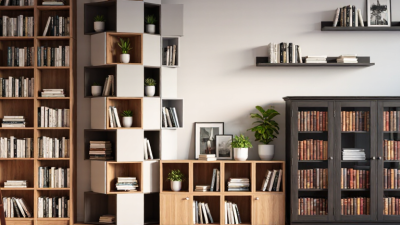
Choosing the best bookshelf for your market starts with comparing its type, material, and construction quality. Open shelving suits living rooms, offices, and retail displays because it offers quick access. Ladder-style shelves save floor space but may hold less weight. Modular units provide flexibility, although repeated assembly can weaken joints. I once selected a narrow unit for a small showroom, but its shallow base felt unstable when customers reached for books.

Material affects appearance, durability, and maintenance. Solid wood gives warmth and handles daily use well, but it can be heavy and sensitive to humidity. Steel frames offer strong support and a modern look. Engineered wood costs less and keeps dimensions consistent, yet exposed edges may swell after water contact. Check panel thickness, surface treatment, screw quality, and the spacing between supports. A shelf should not bend visibly under its intended load. Construction details matter more than attractive photographs.

Tips: Press each joint gently before purchase. Movement suggests weak connections. Check whether adjustable feet improve balance on uneven floors. For tall shelves, use suitable wall-fixing hardware and follow local safety guidance. Ask suppliers for load-testing information, moisture resistance, and replacement-part support. These details reveal reliability. Still, specifications can be incomplete, and I would inspect a sample whenever possible. A beautifully finished shelf may disappoint if its back panel is thin or its fasteners loosen after several months.

Evaluate Size, Capacity, and Space Compatibility

Choosing a bookshelf starts with the room, not the catalog. Measure wall width, ceiling height, doorway clearance, and nearby furniture. Measure twice. Leave breathing room.

The U.S. Census Bureau reported a median new single-family home size of 2,411 square feet in 2023. Yet room layouts vary sharply by market. A tall unit may suit a compact apartment, while a wider, lower shelf works better beneath windows. Keep at least 60 centimeters of walking clearance where possible. Check skirting boards, heating vents, and electrical outlets before fixing the final width. In practical fit-outs, small obstructions cause more returns than weak styling.

Capacity needs a realistic calculation. Estimate shelf load by combining book weight, storage boxes, and decorative objects. Dense hardbacks can exceed 20 kilograms on one shelf. Adjustable shelves provide flexibility, but wider spans may bend under uneven loads. The Consumer Product Safety Commission reported about 22,000 furniture tip-over injuries among children under 18 from 2018 to 2020. Use wall anchoring when appropriate, especially with tall units. Follow the manufacturer’s instructions and local safety requirements.

Do not fill every shelf. Empty space improves access and reduces visual pressure. I have seen attractive layouts fail because users ignored future purchases. A bookshelf that fits today may feel undersized next year. Leave roughly 15 percent spare capacity, then review the plan after measuring your actual collection.

How to Choose the Best Bookshelf for Your Market? – Evaluate Size, Capacity, and Space Compatibility

Bookshelf Type Typical Dimensions
(W × D × H)
Recommended Shelf Load Storage Capacity Minimum Recommended Room Area Space Compatibility Best Market Application Key Evaluation Point
Compact Cube Shelf 60–90 × 30–35 × 90–120 cm 10–15 kg per compartment 6–9 compartments; approximately 60–120 standard books 6 m² Small bedrooms, home offices, entryways, and rental apartments Urban residential markets and space-conscious consumers Confirm that each compartment is deep enough for the intended book sizes while maintaining a small footprint.
Narrow Vertical Shelf 45–60 × 28–35 × 160–200 cm 12–20 kg per shelf 5–7 shelves; approximately 100–180 standard books 7 m² Tall rooms, narrow wall sections, and apartments with limited floor space Markets where vertical storage and compact delivery are priorities Measure ceiling height and allow at least 5–10 cm of clearance for safe placement and installation.
Wide Low Shelf 120–180 × 30–40 × 70–100 cm 15–25 kg per shelf 3–4 shelves; approximately 120–250 standard books 10 m² Living rooms, children’s rooms, media areas, and spaces beneath windows Family-oriented markets needing accessible, flexible storage Check wall width, walkway clearance, and child-accessibility requirements before selecting the product.
Standard Five-Tier Shelf 75–100 × 30–40 × 170–200 cm 15–25 kg per shelf 5 shelves; approximately 150–250 standard books 8 m² Bedrooms, studies, living rooms, and general-purpose home storage Mass residential markets seeking balanced capacity and footprint A 25–35 cm shelf depth suits most paperback and hardcover books without excessive wasted space.
Adjustable Modular Shelf 80–120 × 30–45 × 180–220 cm per unit 15–30 kg per adjustable shelf 4–7 adjustable shelves; approximately 160–320 standard books 10 m² Changing layouts, home libraries, offices, and customers with mixed storage needs Flexible markets that value customization and long-term usability Review shelf-position increments, expansion options, and the stability of connected units.
Ladder-Style Shelf 55–80 × 35–45 × 170–200 cm 8–15 kg per shelf 4–5 open shelves; approximately 80–160 standard books 8 m² Decorative living spaces, home offices, and rooms requiring a visually light design Design-focused markets and consumers combining books with décor Use wall anchoring where required and avoid placing heavy books on the highest or narrowest shelves.
Corner Bookshelf 60–90 × 60–90 × 160–200 cm 10–20 kg per shelf 5–7 shelves; approximately 100–200 standard books 7 m² Unused corners, compact living rooms, bedrooms, and small reading areas Markets where floor area is limited but vertical capacity is still needed Measure both wall lengths and check door, window, radiator, and furniture interference.
Heavy-Duty Library Shelf 90–120 × 35–45 × 180–220 cm 25–40 kg per shelf 5–7 shelves; approximately 250–450 standard books 12 m² Large home libraries, offices, classrooms, and commercial reading spaces Institutional and professional markets requiring high storage capacity Verify total floor loading, anchoring, shelf deflection resistance, and delivery access before purchase.
Wall-Mounted Shelf System 60–240 × 20–30 × 20–200 cm 5–15 kg per shelf, depending on wall and hardware 1–5 tiers; approximately 30–180 standard books 5 m² Very small rooms, offices, narrow corridors, and areas requiring clear floor space Minimalist markets and compact urban interiors Match the fixing system to the wall type and keep installation height convenient for regular use.

Match Design, Features, and Price to Customer Preferences

Choosing the best bookshelf for your market starts with observing how customers live, not guessing from appearance. A compact apartment market may prefer narrow shelves, pale finishes, and adjustable compartments. Family buyers often need deeper levels for picture books, storage baskets, and heavier objects. Measure common room sizes and review customer questions before selecting a design. A beautiful bookshelf can still fail if it blocks a doorway or feels unstable.

Features should support real habits. Adjustable shelves accommodate tall albums, while rounded edges improve safety in busy homes. Reinforced panels matter when customers store textbooks or ceramic pieces. Check the weight capacity with practical testing, not only supplier specifications. Place sample books on each level and watch for bending, wobbling, or difficult assembly. Small details matter. Clear instructions can reduce returns, especially for customers buying online. I once underestimated assembly time, and that mistake changed how I judge convenience.

Price must match perceived value and local spending power. Budget buyers may accept a simple finish, but they still expect firm hardware and accurate dimensions. Mid-range customers often pay more for smoother surfaces, stronger joints, and flexible storage. Compare the total cost, including delivery, packaging, and possible replacement parts. A low price is not always economical if damaged panels create service problems. Ask test customers what they would remove, improve, or pay extra for. Their answers may challenge your original design assumptions.

How to Choose the Best Bookshelf for Your Market?

Match design, features, and price to customer preferences by prioritizing practical value first, then visual style and affordability.

Customer Preference Index: a normalized market-planning benchmark where 100 represents the highest relative priority. Use it to balance storage capacity, durability, price, assembly, and design when building a bookshelf assortment.

Assess Suppliers, Safety Standards, and Market Demand

Choosing a bookshelf for a specific market starts with evidence, not appearance. Grand View Research valued the global furniture market at approximately USD 516.66 billion in 2022, with projected growth through 2030. That expansion creates opportunity, but demand differs sharply by region. The 2023 U.S. American Community Survey shows renters occupy roughly 36% of housing units. Compact shelves, easy assembly, and reversible layouts may therefore suit urban rental markets better than oversized units.

Supplier assessment should cover more than price and photographs. Request factory test records, material specifications, maximum shelf loads, carton-drop results, and production samples. Check whether the supplier follows relevant stability and durability standards, such as ISO 7170 or applicable national requirements. The U.S. Consumer Product Safety Commission estimated about 22,000 furniture tip-over injuries during 2018–2020. Secure back panels, wall-anchor instructions, and clear load labels are practical safeguards. Stability matters.

Market research should combine report data with direct observation. Compare local apartment sizes, competitor prices, return reasons, and customer comments about wobbling or damaged edges. A useful, imperfect rule is to test one sample in a real room before placing a large order. Measure twice. Then inspect fasteners, corner protection, shelf deflection, and assembly time. I would not trust a supplier that provides polished images but avoids independent testing. A lower unit cost can become expensive after returns, replacements, and safety complaints. Supplier transparency is part of product quality.