10 Coffee Table Buying Tips for Global Buyers
Buying a Coffee Table for international distribution requires more than choosing an attractive shape. Global buyers must balance design, durability, safety, shipping efficiency, and local customer preferences. A low table may suit a minimalist apartment, yet feel impractical in homes with young children. Details matter.
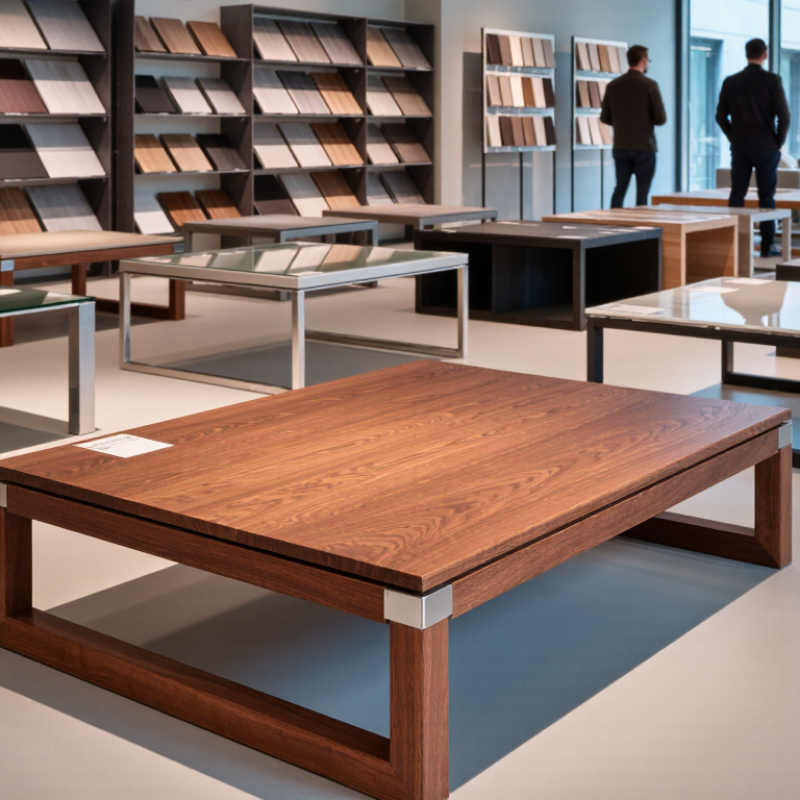
Experienced buyers usually begin with accurate dimensions, material specifications, and verified supplier information. Measure the tabletop, leg height, carton size, and packed weight. These figures affect room usability, warehouse storage, freight costs, and return risks. Photos can deceive. A warm walnut finish may look premium online but appear darker under showroom lighting. Request physical samples, finish boards, or detailed videos before placing a large order.
Material selection also deserves careful attention. Solid wood, engineered wood, glass, metal, and stone each create different maintenance and transportation concerns. Check moisture resistance, edge quality, hardware strength, and surface stability. Ask suppliers about production experience, quality inspections, packaging tests, and after-sales support. Reliable documentation should match the actual product, not merely describe an ideal version.
International compliance cannot be assumed. Buyers should confirm applicable safety, labeling, chemical, packaging, and import requirements in every target market. Independent testing may be worthwhile for larger programs. Still, no checklist removes every uncertainty. A supplier can pass one inspection and disappoint during peak production. The following ten Coffee Table buying tips explore practical decisions, common oversights, and questions that help global buyers reduce costly surprises while building dependable sourcing relationships.
Match Table Height to Seating: Keep It Within 5 cm of the Sofa Seat
10 Coffee Table Buying Tips for Global Buyers
Match Table Height to Seating: Keep It Within 5 cm of the Sofa Seat
A coffee table should usually sit within 5 cm of the sofa seat. This range supports comfortable reaching without forcing guests to bend forward. Measure from the floor to the top of the seat cushion, not the frame. Cushions can compress over time, especially under daily family use. A table slightly lower often feels relaxed, while a taller table may block conversation and views across the room. Keep sightlines clear.
Tips: Measure the sofa in its usual condition. Include cushions, throws, and a favorite reading position. Place a temporary box beside the sofa for one evening. Notice whether drinks, books, and remote controls remain easy to reach. Then check walking clearance, because a correct height cannot fix a crowded layout.
In my own room tests, a 3 cm difference felt minor at first. After an hour, the higher table made leaning forward tiring. This guideline is practical, not absolute. Deep sofas, firm cushions, and floor seating can change the ideal measurement. I once chose a beautiful table without checking seat height. It looked balanced, but daily use felt awkward. That mistake taught me to test function before appearance. For international buyers, confirm measurements in centimeters and inches, since listings may use either system.
Coffee Table Height Matching Guide
For comfortable reach and balanced proportions, choose a coffee table height within 5 cm of the sofa seat height. The ranges below reflect common residential sofa and coffee table dimensions.
The recommended coffee table range is calculated as 5 cm below to 5 cm above each sofa seat height. Measure from the floor to the top of the seat cushion before purchasing.
Measure Circulation Space: Allow at Least 45 cm Around the Table
Measure Circulation Space: Allow at Least 45 cm Around the Table
A coffee table should support daily movement, not block it. Leave at least 45 cm between the table edge and nearby seating. This space gives knees room and keeps people from brushing against corners. It also helps guests walk between the sofa and a doorway safely. In smaller rooms, 45 cm may feel generous. In busy homes, it can disappear quickly.
Measure the full route, not just the empty floor. Open cabinet doors, recline seating, and pull out drawers before choosing a table. I once measured from the sofa to the wall, then forgot the cabinet doors. The table fit on paper, but the room felt cramped. That mistake changed my process. Mark the table shape with tape, then walk around it with a tray or shopping bag. Check both centimeters and inches, since global product specifications may use either system. Forty-five centimeters equals roughly 18 inches. Rugs can also hide distance, so measure from the actual table edge. A rounded table may improve movement, while a sharp rectangular design needs more careful positioning. If children, older adults, or wheelchair users use the room, extra clearance is often the safer choice. Room layouts vary, and the 45 cm guideline is a starting point, not a rigid answer.
Check Stability and Strength Under EN 12521 Testing Requirements
10 Coffee Table Buying Tips for Global Buyers
When buying a coffee table for international markets, inspect stability before surface appearance. EN 12521 provides a useful benchmark for domestic table safety, strength, and durability. Ask the supplier which edition was used. Standards can change.
A practical inspection starts with the frame, joints, legs, and tabletop connection. Place the table on a level floor and apply controlled pressure near the edges. Watch for rocking, twisting, loose fasteners, or sudden movement. It should remain steady.
Strength matters during daily use. Testing should reflect loads from books, meals, decorations, and accidental leaning. Check whether the tabletop resists bending and whether the joints remain tight after repeated loading. Ask for test records from a competent, independent laboratory.
Look closely at the test configuration. Dimensions, materials, loading points, and conditioning can affect the result. A report for one model may not cover every size or finish. That detail is often missed.
Do not rely on a certificate alone. I have seen attractive tables fail a simple floor check because one leg was slightly shorter. That small defect can become a customer complaint. Packaging and transport can also weaken joints before delivery.
Confirm that the tested sample matches the production version. Review assembly instructions, hardware quality, and inspection records. EN 12521 supports responsible purchasing, but it does not replace destination-market requirements. A careful buyer checks both.
Compare Materials Using FSC, REACH, and EU Formaldehyde Limits
When buying a coffee table across borders, compare materials beyond color and price. Solid oak, rubberwood, plywood, and MDF can look similar after finishing, but their risks differ. For wood products, ask for a valid FSC certificate and chain-of-custody details. FSC supports responsible forestry, yet it does not prove low chemical emissions. That distinction is easy to miss.
Check the panel core, edge banding, adhesive, paint, and protective coating. Under REACH, suppliers should disclose relevant restricted substances and any substances of very high concern. A general compliance statement is helpful, but it is not enough for careful purchasing. Request a recent laboratory report linked to the exact material or production batch. Smell is not a reliable test. I once underestimated a strong odor from a drawer interior; ventilation reduced it, but testing would have been wiser.
For EU-bound furniture, confirm formaldehyde performance against the applicable EU restriction. From 6 August 2026, furniture and wood-based articles must meet an emission limit of 0.062 mg/m³ under the relevant REACH restriction. Ask which test method, chamber conditions, and sample location were used. A report covering only the tabletop may overlook emissions from hidden MDF parts. That detail matters. Suppliers can also provide material thickness, moisture resistance, and replacement-part information. Documents may look complete while missing the adhesive specification. Inspect carefully.
Calculate Landed Cost by MOQ, CBM, Incoterms, and Freight per Unit
When buying coffee tables internationally, calculate landed cost before comparing factory prices. Landed cost includes the product, packaging, inland transport, export fees, freight, insurance, duties, and destination charges. A low unit price can hide expensive delivery.
Use this practical formula: landed cost per unit equals total shipment cost divided by sellable units. For example, an MOQ of 100 tables at 42 dollars costs 4,200 dollars. If each packed table uses 0.18 CBM, the shipment requires 18 CBM. An ocean quote of 1,800 dollars adds 18 dollars per table. Add 600 dollars for inland delivery, documentation, and destination handling. The estimated cost becomes 48 dollars per unit before duty and tax. Check the figures twice. Packaging dimensions are often underestimated.
Incoterms change your responsibility. Under FOB, you normally arrange the main freight; under CIF, the seller arranges freight and basic insurance to the named port. DAP may include delivery, but import duties usually remain with the buyer. The International Chamber of Commerce’s Incoterms 2020 rules clarify these cost and risk boundaries. UNCTAD’s Review of Maritime Transport 2024 reported global seaborne trade reached about 12.3 billion tons in 2023, with uneven freight conditions across routes. Request quotes by CBM, chargeable weight, origin, destination, and validity period. Freight rates move quickly. A 30-day quote may already be optimistic. Also compare MOQ scenarios: doubling volume can reduce freight per unit, but it may increase storage costs and cash pressure.